




When an accident aggravates an old injury or worsens a chronic health condition, many people worry that their prior medical history will prevent them from receiving fair compensation. Insurance companies often use pre-existing conditions as leverage to reduce settlement offers, but you have the legal right to recover damages for any worsening of your condition caused by someone else’s negligence. Understanding how Florida law protects your interests can make the difference between accepting an inadequate offer and securing the full compensation you deserve.
At Amanda Demanda Injury Lawyers, we have extensive experience handling personal injury cases involving pre-existing conditions. Our legal team knows how insurance companies operate and how to counter their tactics with compelling medical evidence and strategic negotiation. We aggressively pursue legal action to ensure you receive compensation not just for your new injuries but for any aggravation of previous conditions caused by the accident.
Understanding Pre-Existing Conditions in Personal Injury Claims
A pre-existing condition refers to any documented health issue that existed before your accident occurred. These conditions can include chronic illnesses such as arthritis, diabetes, or asthma, as well as previous injuries, such as back problems, joint damage, or old fractures. Pre-existing conditions do not disqualify you from pursuing compensation, but they require careful documentation to demonstrate how the accident made your condition worse.
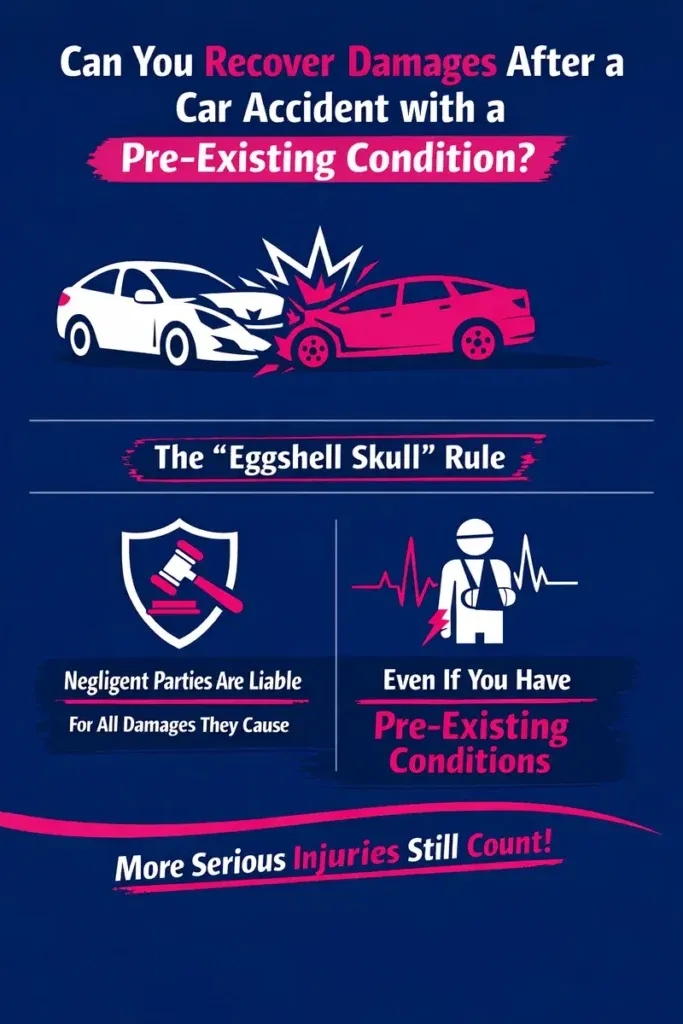
Insurance adjusters often scrutinize medical records to find any evidence of prior health issues, hoping to argue that your current symptoms stem from your existing condition rather than the recent accident. They may claim that you would have experienced the same pain and limitations regardless of the incident, leading them to offer lower settlements or deny claims altogether. However, Florida law recognizes the eggshell skull rule, which holds liable parties responsible for all damages resulting from their negligence, even if the victim’s injuries are more severe due to a pre-existing vulnerability.
How the Eggshell Skull Rule Protects Injury Victims
The eggshell skull rule is a fundamental legal doctrine that protects people with pre-existing conditions. This principle states that a negligent party must take victims as they find them, meaning they cannot escape liability simply because the injured person was more vulnerable to harm. If an accident aggravates a pre-existing back injury, causes a chronic condition to flare up, or requires additional treatment for an old injury, the at-fault party remains responsible for these consequences.
Successfully demonstrating that an accident worsened your pre-existing condition requires specific evidence. Medical documentation forms the foundation of your case, including records showing your condition before and after the incident. You need to establish a clear timeline that outlines your health status before the accident, the changes that occurred immediately after the incident, and the ongoing impact on your daily life. Medical providers should document any new symptoms, increased pain levels, or additional limitations that appeared after the accident.
Expert medical testimony can strengthen your claim by explaining how the accident caused measurable changes to your condition. If your medical records show you were managing your condition effectively before the accident but now require more aggressive treatment, this demonstrates aggravation.
Insurance Company Tactics and Settlement Calculations
Insurance adjusters use several strategies to reduce payouts when pre-existing conditions are involved. They may offer quick, lowball settlements before you fully understand the extent of your injuries, counting on your fear that having prior medical issues will negatively affect your case. They might argue that your current symptoms are merely a natural progression of your existing condition and have nothing to do with the accident. Insurers also try to drag out the claims process, hoping frustration or financial strain will pressure you into accepting less.
Determining the value of your settlement becomes more complex when pre-existing conditions are present. Your compensation should reflect all costs related to the aggravated condition, including additional medical expenses, future treatment requirements, and increased limitations on your daily activities. If the accident forced you to undergo surgery for a condition you were previously managing with conservative treatment, the cost of that surgery belongs in your settlement.
Lost wages are another critical component of your damages. If your aggravated condition prevents you from returning to work or limits the types of jobs you can perform, you deserve compensation for this economic loss.
Get the Compensation You Deserve With Amanda Demanda Injury Lawyers
Pre-existing conditions complicate personal injury claims, but should never prevent you from seeking fair compensation. Attorney Amanda Demanda and our skilled legal team understand the challenges you face when insurance companies try to use your medical history against you. We build compelling cases that demonstrate exactly how the accident worsened your condition. Our aggressive approach to negotiation and litigation has helped countless clients in Miami, Houston, and Tampa secure substantial settlements despite having prior health issues.
You deserve compensation that accounts for all the ways this accident has affected your life, including the aggravation of pre-existing conditions. Do not let insurance adjusters pressure you into accepting an inadequate offer. Contact Amanda Demanda Injury Lawyers today for a free consultation to discuss your case and learn how we can help you pursue maximum compensation.
Back to Blog