
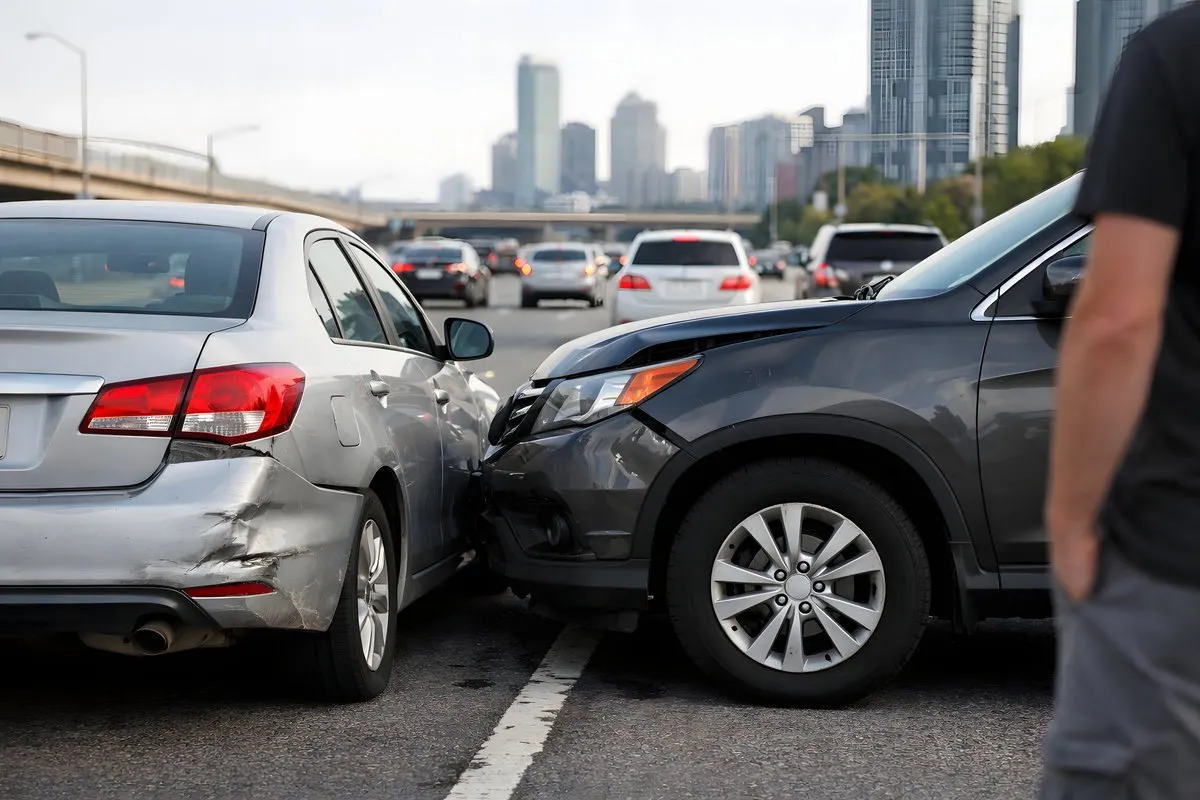

Few crashes are as violent or as legally complicated as a T-bone accident. When one vehicle drives directly into the side of another at an intersection, the force of impact is absorbed by a door panel, with very little standing between the occupants and a vehicle traveling at full speed. These collisions cause devastating injuries, and figuring out who is legally responsible is rarely as straightforward as it looks.
At Amanda Demanda Injury Lawyers, we represent victims of serious intersection crashes throughout Florida, fighting to hold at-fault drivers accountable and recover the full compensation our clients deserve. Our team handles a wide range of motor vehicle accident cases, and we know how critical it is to act quickly after a T-bone crash to preserve evidence and protect your rights.
What Makes T-Bone Crashes So Dangerous
A T-bone collision, also called a side-impact or broadside crash, occurs when the front of one vehicle strikes the side of another, typically at an intersection. According to the IIHS, 32% of crash deaths in urban areas occurred at intersections in 2023, making them among the deadliest locations on any road. The sides of vehicles offer far less structural protection than the front or rear, meaning occupants on the struck side absorb the full energy of the collision with little buffer.
Broken ribs, spinal injuries, traumatic brain injuries, and internal organ damage are all common outcomes of T-bone crashes, especially when the striking vehicle is traveling at higher speeds. The severity of these injuries is often compounded by the fact that victims rarely see the impact coming, leaving no time to brace or react.
How Right-of-Way Works in Florida
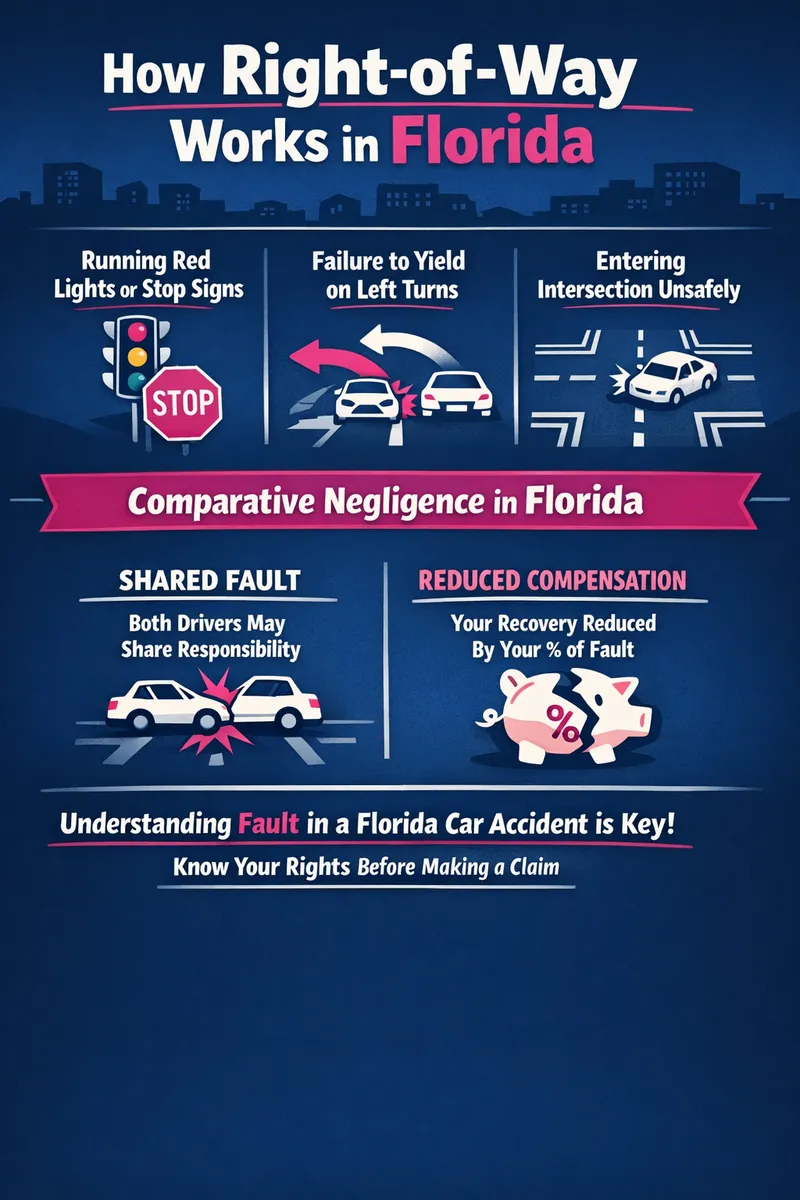
Florida’s traffic laws govern who has the legal right to proceed through an intersection, and a violation of those rules is typically the starting point for establishing fault in a T-bone crash. The most common right-of-way violations that lead to these accidents include running red lights or stop signs, failing to yield when turning left across oncoming traffic, and entering an intersection without confirming it is clear.
Florida follows a comparative negligence rule, which means fault can be shared between drivers. If both parties played some role in causing the crash, each may bear a percentage of liability, and your compensation can be reduced by your share of fault. Understanding how fault is determined in a Florida car accident is essential before making any decisions about your claim.
What Evidence Determines Liability
Proving fault in a T-bone crash requires building a clear picture of what happened at the intersection. Florida law places the burden on the injured party to show the other driver violated a traffic law or acted negligently, and gathering the right evidence quickly makes all the difference. Several types of evidence are examined when determining who had the right of way.
Some of the most important evidence in T-bone accident cases includes the following:
- Traffic camera or dashcam footage: Video is often the clearest way to show which driver had the legal right to proceed
- Police report findings: The responding officer’s observations, driver statements, and any citations issued carry significant weight
- Witness statements: Bystanders who saw the crash can confirm or challenge each driver’s account of events
- Physical evidence: Skid marks, vehicle damage patterns, and final resting positions help reconstruct the sequence of the collision
- Cell phone records: If distracted driving is suspected, records can show whether a driver was on a phone at the moment of impact
Preserving this evidence early is critical, as camera footage can be overwritten and witnesses become harder to locate over time.
Protecting Your Claim After a T-Bone Crash
Call 911 immediately and remain at the scene. A police report is essential documentation for any insurance or legal claim. Seek medical attention as soon as possible, even if your injuries seem minor, because many serious conditions from side-impact crashes have delayed symptoms. Document everything you can at the scene, including photos of vehicle positions, damage, road markings, and any signals or signs.
Before speaking with the other driver’s insurance company, consult with an attorney. Adjusters are trained to minimize payouts, and a statement made before you understand the full extent of your injuries can be used against you. Knowing how insurance adjuster tactics work can help you protect your rights from the start.
Contact Amanda Demanda Injury Lawyers After a Florida T-Bone Crash
At Amanda Demanda Injury Lawyers, our team thoroughly investigates intersection accidents, gathers critical evidence, and pushes back hard against insurance companies that try to shift blame onto our clients. Attorney Amanda Demanda fights aggressively on behalf of injured Floridians, and our mission is to make sure every client is fully compensated for the pain, losses, and hardship they’ve experienced. If you were hurt in a T-bone accident at a Florida intersection, don’t wait to get legal help. The sooner our team can begin investigating, the stronger your case will be. Reach out to us today to schedule your free consultation.
Back to Blog