



When you file a claim after an accident, you expect the insurance company to deal with you honestly and fairly. Unfortunately, that does not always happen. Insurers sometimes delay, deny, or drastically underpay valid claims in ways that cross the line from aggressive negotiating into conduct that Texas law considers unlawful. Knowing when an insurance company has acted in bad faith, and what you can do about it, is one of the most important things an injury victim in Texas can understand.
At Amanda Demanda Injury Lawyers, we represent victims throughout Houston and across Texas, and we know how damaging insurance bad faith can be on top of an already difficult situation. Attorney Amanda Demanda and our team fight back against insurers who fail to honor their obligations to the people they are supposed to protect. Our practice areas include motor vehicle accidents and insurance disputes, and we are here to help you hold negligent parties, including insurance companies, fully accountable.
What Insurance Bad Faith Means in Texas
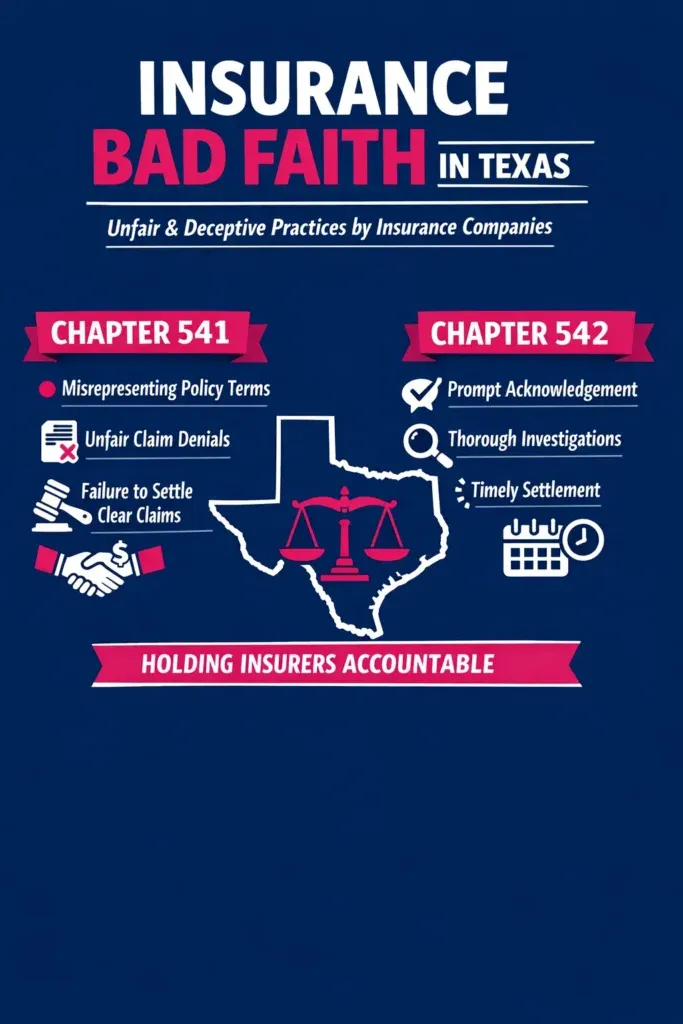
Insurance bad faith refers to an insurer’s failure to deal honestly and fairly with a policyholder or claimant when handling a claim. In Texas, this conduct is governed by two key provisions of the Texas Insurance Code. Chapter 541 prohibits unfair methods of competition and deceptive acts or practices in the insurance business, including misrepresenting policy provisions, failing to settle claims where liability is reasonably clear, and refusing to pay claims without conducting a reasonable investigation. Chapter 542 sets strict timelines insurers must follow when acknowledging, investigating, and settling claims.
Together, these statutes give Texas injury victims meaningful legal protections and, when violated, the right to pursue additional damages beyond their original claim. Bad faith claims are separate from a standard personal injury case, and understanding the distinction matters when evaluating your options after an accident.
Common Examples of Insurance Bad Faith in Texas
Not every disputed claim rises to the level of bad faith. Insurance companies are entitled to investigate claims and negotiate settlements. Bad faith occurs when their conduct crosses into deliberate unfairness, unreasonable delay, or outright deception. Recognizing the warning signs early can help you take action before your claim is further damaged.
The most common bad faith behaviors Texas victims encounter include:
- Unreasonable delays: Texas law requires insurers to acknowledge a claim within 15 days and accept or deny it within 15 business days of receiving all requested information. Dragging out the process without justification violates Chapter 542
- Lowball offers without investigation: Offering substantially less than a claim is worth without conducting a proper investigation is a recognized form of bad faith under Texas law
- Misrepresenting policy terms: Telling a claimant their policy does not cover a loss when it clearly does is a direct violation of Chapter 541’s unfair settlement practices provisions
- Denying a claim without a valid reason: An insurer that denies coverage without a reasonable basis, or fails to explain the reason for a denial in writing, may be acting in bad faith
- Forcing unnecessary litigation: Compelling a policyholder to file a lawsuit to recover an amount that should have been paid voluntarily is explicitly prohibited under Chapter 542
Each of these behaviors can form the basis of a bad faith claim in addition to recovering your underlying damages. Our resources provide further information on how Texas insurance law protects injury victims.
What You Can Recover in a Bad Faith Claim?
There are different damages you may be eligible to recover following a bad faith claim. These include the following:
Actual Damages and Interest
When an insurer violates the prompt payment requirements under Chapter 542, Texas law entitles the claimant to their actual damages plus 18% annual interest on the amount of the claim, along with attorney’s fees. This interest penalty is automatic when deadlines are missed and gives insurers a strong financial incentive to process claims on time.
Additional Damages Under Chapter 541
Claims brought under Chapter 541 for unfair settlement practices can result in actual damages, court costs, and attorney’s fees. If the insurer’s conduct was committed knowingly, a court may award up to three times the amount of actual damages. These enhanced damages reflect Texas law’s serious treatment of deliberate misconduct by insurance companies and serve as a meaningful deterrent.
Steps to Take If You Suspect Bad Faith
Documenting everything is critical. Keep records of every communication with the insurance company, including dates, names, and the substance of each conversation. Save all written correspondence, denial letters, and any explanations the insurer provides. If you believe your claim is being mishandled, requesting everything in writing creates a paper trail that can be essential to a bad faith case.
Contact an attorney as early as possible. Texas has a two-year statute of limitations for bad faith claims under Chapter 541, and the Chapter 542 notice requirements must be carefully followed before filing suit. Missing procedural steps can affect your ability to recover the full range of damages available to you. Our case results show what is possible when victims have aggressive legal representation in their corner.
Contact Amanda Demanda Injury Lawyers in Houston
Insurance companies have legal teams working to protect their bottom line from the moment a claim is filed. You deserve the same level of committed advocacy working in your corner. At Amanda Demanda Injury Lawyers, Attorney Amanda Demanda is personally involved in every case and brings a genuine dedication to making sure no client is left without the full compensation they are owed. She understands how insurers operate and knows how to hold them accountable under Texas law.
If you believe an insurance company has acted in bad faith toward you after an accident in Houston or anywhere in Texas, do not wait to get legal guidance. Our firm works on a contingency fee basis, meaning you pay nothing unless we win. Learn more about our firm on our about us page, and reach out to our team today through our contact page.
Back to Blog