


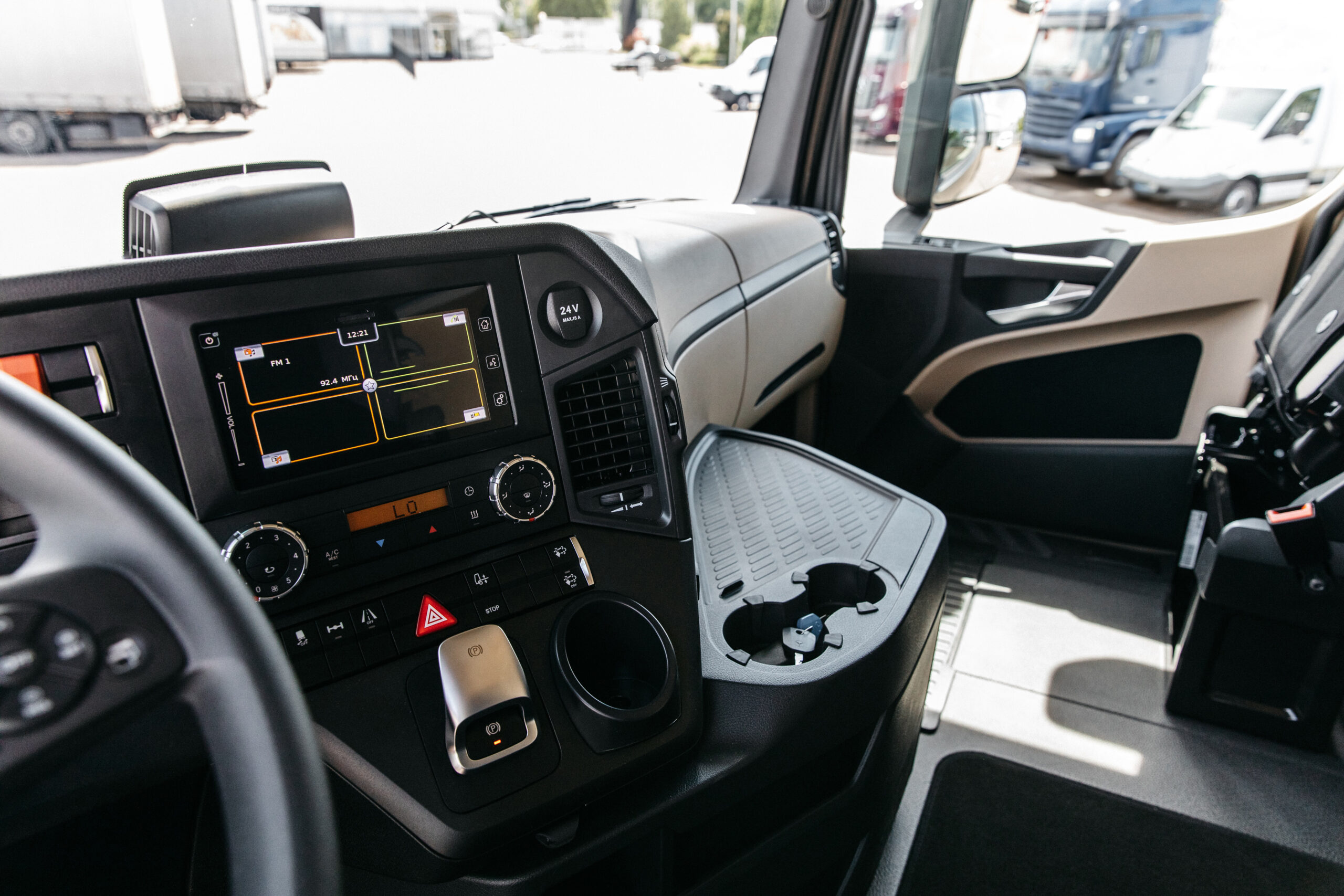

A single piece of hardware bolted into a truck’s cab can decide who was speeding, who was overdue for rest, and who is responsible for the crash that changed your life. Trucking companies know this, and their legal teams move fast to shape how that data gets read.
At Amanda Demanda Injury Lawyers, we handle Houston truck accident cases in which electronic logging device data becomes the deciding piece of evidence. Attorney Amanda Demanda and Managing Partner Miriam Fresco Agrait have built a practice around pulling this data before it disappears and turning it into proof a jury can follow.
What Do Electronic Logging Devices Record?
An electronic logging device connects directly to a commercial truck’s engine and automatically records driving time, engine status, and vehicle movement. Federal regulations require most commercial drivers to use a certified ELD in place of paper logbooks, which were far easier to falsify.
A compliant ELD captures more than hours behind the wheel. It logs every duty status change down to the minute, engine-on and engine-off events with GPS coordinates, vehicle speed at regular intervals, and any attempted tampering or malfunction. Because the device links to a specific driver and vehicle, it becomes difficult for a trucking company to obscure who was operating the truck and what they were doing in the hours before your crash.
How ELD Data Proves Hours-of-Service Violations
Federal hours-of-service rules set hard limits on how long a commercial driver may operate before mandatory rest. A driver cannot drive more than 11 hours after 10 consecutive hours off duty, and the entire on-duty window is capped at 14 hours regardless of how those hours are split between driving and other tasks. Drivers must also take a 30-minute break after 8 cumulative hours of driving.
Every one of those limits is verifiable through ELD data. When the record shows a driver was on hour 13 of a 14-hour window, or had driven for hours without a required break, that violation may support a negligence claim under Texas law. Our team reviews this data alongside police reports and driver employment history to determine whether a trucking company pressured a driver to meet an unrealistic schedule.
Fatigue remains one of the most dangerous and underreported factors in commercial truck crashes. An ELD record showing hours-of-service violations can be among the clearest evidence that a driver was too fatigued to operate safely, which is why we treat this data as a priority in every Houston truck accident case we take on.
How ELD Data Can Reconstruct the Crash Timeline
ELD records are time-stamped to the minute, which allows us to overlay the device’s timeline with the moment of the crash. This can establish exactly what the driver was doing before impact, whether they were speeding, braking late, or continuing to accelerate when they should have slowed down.
We combine ELD data with several other sources to build a complete picture of what happened on the road, including the following:
- Engine control module data showing vehicle speed and braking in the seconds before the crash
- Maintenance and inspection records that may reveal mechanical failures
- Dispatch records and cargo manifests tied to the trip
- Witness statements and any available surveillance or dash cam footage
Cross-referencing these sources with the ELD timeline can expose inconsistencies that indicate falsified logs or a driver operating outside the rules, strengthening the case we build on your behalf.
Why ELD Records Can Disappear If You Wait
Trucking companies are not required to hold onto this data forever. Under FMCSA guidance, a motor carrier only has to retain a driver’s hours-of-service records for 6 months, and older systems can overwrite or delete data well before that window closes if no one intervenes.
That is why we send preservation letters within days of taking on a case, not weeks. Once a trucking company receives notice that litigation is anticipated, it has a legal obligation to preserve relevant evidence. Waiting to contact an attorney gives the company more time to lose, overwrite, or dispute records that could otherwise prove exactly what happened. If you were hurt in a Texas truck accident, the clock on this evidence starts the moment the crash occurs.
Trust Amanda Demanda Injury Lawyers With Your Texas Truck Accident Case
Our firm has represented truck accident victims across Houston and the surrounding Texas and Florida markets, including a case that resulted in a $43 million jury verdict. Attorney Amanda Demanda and Managing Partner Miriam Fresco Agrait, a Board Certified Civil Trial Attorney with more than 14 years of experience, bring that same preparation to every ELD and electronic control module record we obtain, working to hold negligent drivers and trucking companies accountable.
We work on a contingency fee basis and offer services in English and Spanish, so cost and language should never stand between you and the answers this data can provide. If a commercial truck accident left you injured, reach out to our team as soon as you can so we can begin preserving the evidence your case may depend on.
Back to Blog