


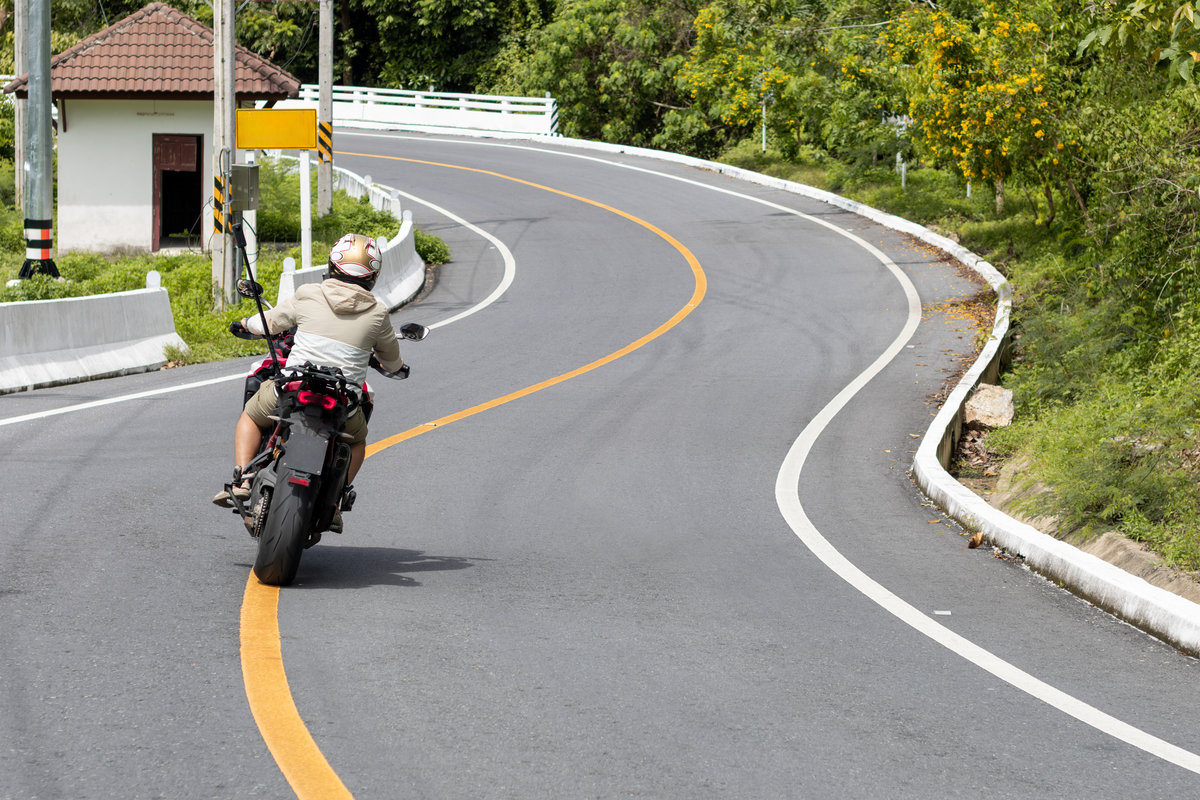

Motorcyclists in Florida know the feeling well: traffic is backed up on I-95 or the Palmetto, the heat is relentless, and the space between lanes looks like a tempting shortcut. In many countries, and one U.S. state, riding between lanes of slow or stopped traffic is not only legal but practiced routinely. In Florida, however, it is a different story entirely, and riders who do it are taking on more than just a traffic risk.
If you were injured in a motorcycle accident in Florida, the question of whether you were lane splitting at the time of the crash can have significant consequences for your ability to recover compensation. Amanda Demanda Injury Lawyers represents motorcyclists across Florida who have been seriously hurt in crashes, and our Miami motorcycle accident attorneys know how to protect your claim when the other side tries to use your riding behavior against you.
Lane Splitting Is Illegal in Florida
Florida law does not permit lane splitting. Under Florida Statute § 316.209, motorcycles must be operated within a single lane and may not be driven between lanes of traffic or between adjacent rows of vehicles. The statute does permit motorcycles to ride two abreast within a single lane, a practice sometimes confused with lane splitting, but passing or filtering between lanes of moving or stopped traffic is prohibited.
This matters because the legal status of lane splitting in Florida is not ambiguous. It is a traffic violation, and if you were engaging in it at the time of a crash, that fact will almost certainly become a central issue in your claim.
Why the 2023 Comparative Fault Law Makes This More Consequential
Florida’s shift to modified comparative fault in 2023 changed the stakes for any rider found to have contributed to their own accident. Under the current law, if you are assigned more than 50 percent of the fault for a crash, you cannot recover any compensation at all. If your fault is 50 percent or below, you recover, but your total damages are reduced proportionally.
For a rider who was lane splitting at the time of a crash, an insurance company will immediately argue that the illegal maneuver contributed to the collision and attempt to assign a high fault percentage to the motorcyclist. Whether that argument succeeds depends entirely on the full picture of what happened, and on whether the injured rider has effective legal representation.
When Lane Splitting Does Not Mean You Lose Your Claim
Being in violation of a traffic law at the time of an accident does not automatically bar recovery in Florida, it becomes one factor in the comparative fault analysis. What matters is whether that violation actually caused or contributed to the crash.
How Fault Gets Evaluated in These Cases
The following are the types of questions that shape how fault is apportioned when lane splitting is involved:
- Did the other driver make a sudden lane change without signaling that a rider traveling between lanes could not have anticipated?
- Was the other driver distracted, speeding, or impaired when the crash occurred?
- Would the crash have happened even if the rider had been traveling in a single lane?
- What do traffic cameras, dashcam footage, or witness accounts show about the sequence of events?
A rider who was technically lane splitting but was struck by a driver who ran a red light, changed lanes without looking, or was texting behind the wheel may still have a strong claim. The other driver’s negligence does not disappear because the motorcyclist made a traffic error. That is why the full evidentiary picture matters so much, and why working with an attorney who understands how insurers use these arguments is essential. Our overview of common insurance adjuster tactics breaks down how this process typically unfolds.
The Broader Safety Context for Florida Motorcyclists
Lane splitting aside, motorcycle accidents in Florida are disproportionately severe. According to the National Highway Traffic Safety Administration, motorcyclists were killed at a rate nearly 28 times higher than passenger car occupants per vehicle miles traveled in 2023, with 6,335 motorcyclists killed nationally that year. Florida consistently ranks among the most dangerous states for motorcyclists due to its year-round riding season, high traffic volume, and large numbers of tourists unfamiliar with local roads.
These numbers reflect a reality that injured riders and their families understand deeply: when a motorcycle crash happens, the consequences are rarely minor. Our Florida motorcycle accident attorneys handle cases involving traumatic brain injuries, spinal cord damage, amputations, and wrongful death — and we approach each one with the same intensity. In the most devastating cases, our Florida wrongful death attorneys are here to support the families left behind.
What Every Florida Motorcyclist Should Know Before Filing a Claim
If you were involved in a crash and lane splitting was part of the picture, the single most important thing you can do is speak with an attorney before talking to any insurance representative. Recorded statements made in the hours or days after a crash, when you are injured, shaken, and not fully aware of the legal implications, can be used to assign you a higher fault percentage than the evidence actually supports.
An attorney can also ensure that evidence is preserved before it disappears, identify whether the other driver had their own violations or contributing negligence, retain accident reconstruction experts when needed, and frame your claim in the way that gives you the best chance at fair compensation. For riders who want to understand how Florida’s motorcycle laws apply more broadly to their riding and their rights, our guide to key motorcycle laws every Florida rider should know is a useful starting point.
Contact Amanda Demanda Injury Lawyers After a Florida Motorcycle Accident
A traffic violation does not mean you forfeit your rights after a serious crash. What it means is that you need an attorney who knows how to build the full case, one that presents the other driver’s negligence clearly and challenges any attempt to assign you more fault than the evidence supports. Attorney Amanda Demanda, a National Trial Lawyers Top 40 Under 40 honoree, and Managing Partner Miriam Fresco Agrait, a Board Certified Civil Trial Attorney with over 14 years of experience and a Martindale-Hubbell AV Preeminent Rating, lead a team that has secured results including a $43 million jury verdict for a seriously injured client.
We are ready to review your case and fight for what you deserve. Reach out through our contact form to schedule your free consultation today.
Back to Blog
