



Most people assume that if they get hurt on someone else’s property, the owner is automatically responsible. The reality is more complicated. Property owners in Florida have legal obligations to maintain safe conditions, but whether those obligations were violated, and whether that violation caused your injury, depends on a set of factors that insurance companies and defense attorneys will scrutinize carefully.
If you were injured on someone else’s property in Florida, understanding what the law actually requires from property owners is the first step toward knowing whether you have a valid claim. Amanda Demanda Injury Lawyers represents premises liability victims throughout Florida, and our Miami premises liability attorneys are here to help you evaluate your situation and fight for the compensation you deserve.
The Foundation: Duty of Care
At the heart of every premises liability case is a legal concept called duty of care. In Florida, property owners owe a duty to maintain their property in a reasonably safe condition for people who enter it, but the extent of that duty depends on why the person was on the property in the first place.
Florida law recognizes three categories of visitors, each carrying a different level of legal protection.
Invitees
An invitee is someone who enters a property with the owner’s express or implied permission for a purpose connected to the owner’s business or interests. Customers in a store, patients in a medical office, and guests at a hotel are all invitees. Property owners owe invitees the highest duty of care, they must not only fix known hazards but also inspect the property regularly to discover and address hazards they may not yet be aware of.
Licensees
A licensee enters with the owner’s permission but for their own purposes, not the owner’s. Social guests, friends or family visiting a home, are the most common examples. Property owners must warn licensees of known dangers that are not obvious, but they are not required to conduct regular inspections for unknown hazards.
Trespassers
Trespassers generally receive the least protection under Florida law, though there are important exceptions, particularly when children are involved. Our blog on whether you can sue a property owner if you were trespassing covers those nuances in detail.
What an Injured Person Must Prove
Establishing that a property owner had a duty of care is only the beginning. To successfully bring a premises liability claim in Florida, an injured person generally must prove all of the following elements:
- The property owner owed them a duty of care based on their visitor status
- A dangerous condition existed on the property
- The owner knew or reasonably should have known about the dangerous condition
- The owner failed to fix the hazard or adequately warn about it
- That failure directly caused the injury
- The injury resulted in actual, documented damages
Each of these elements can be contested. The property owner’s insurer will look for any argument that the hazard was not foreseeable, that the owner had no reasonable opportunity to discover it, or that the injured person’s own actions contributed to the accident.
The Knowledge Requirement in Slip-and-Fall Cases
One of the most frequently litigated issues in Florida premises liability cases, particularly slip-and-fall accidents in commercial settings, is the question of notice. Did the property owner know about the dangerous condition, or should they have known about it?
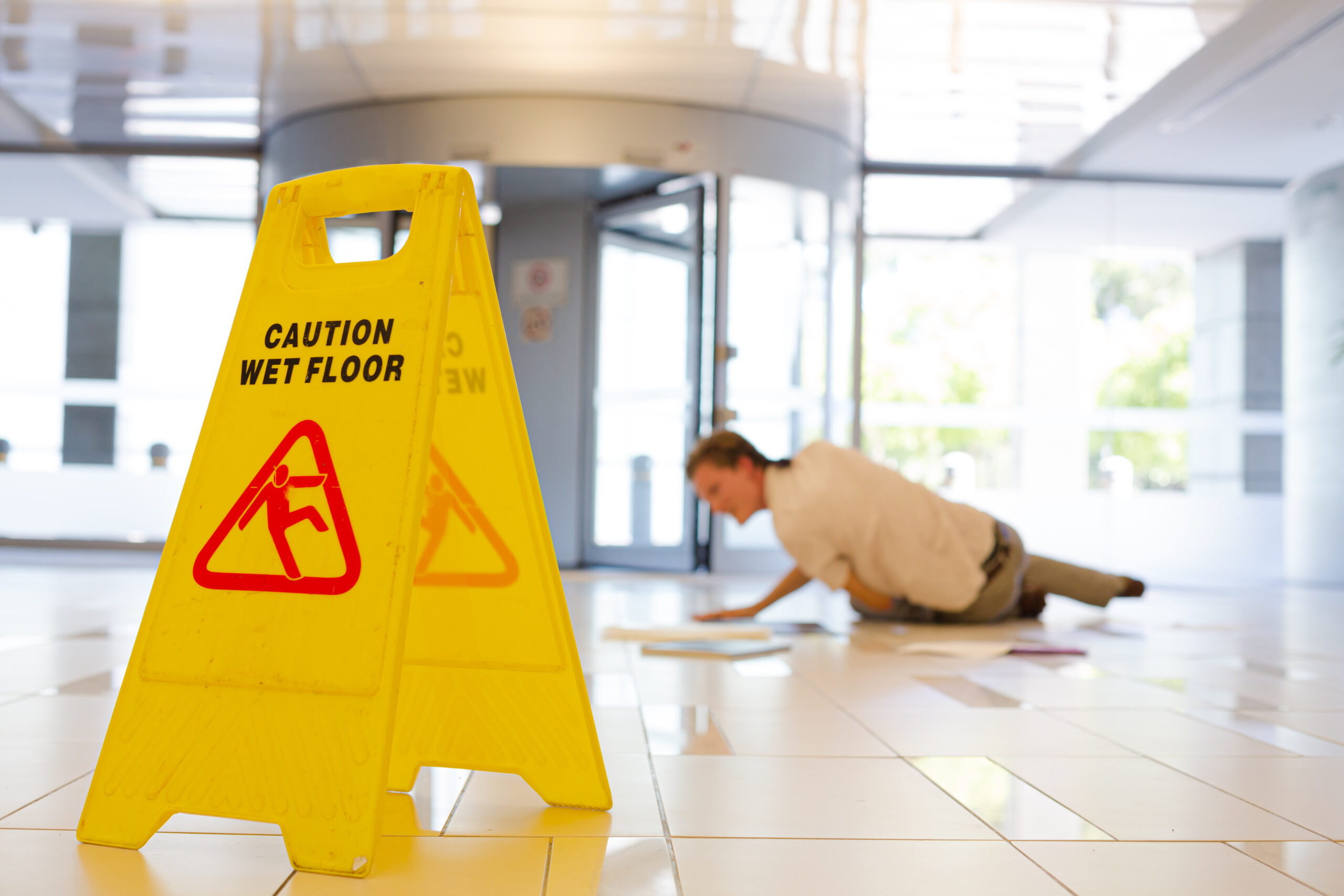
Florida Statute § 768.0755 specifically addresses slip-and-fall cases involving transitory foreign substances in business establishments, things like spilled liquid, tracked-in water, or debris on a floor. Under this statute, a claimant must show that the business had actual or constructive knowledge of the dangerous condition and failed to act. Constructive knowledge can be established by showing that the condition existed long enough that a reasonable inspection would have discovered it, or that the same type of condition regularly occurred in that location.
This is why evidence gathered immediately after a fall matters so much: surveillance footage, photographs of the hazard, incident reports, and witness accounts can all establish how long the condition existed and whether employees had reason to know about it. Our detailed breakdown of how fault is determined in South Florida slip-and-fall cases covers this evidentiary process in full.
Common Premises Liability Situations in Florida
Property owner negligence can arise in many different settings. Some of the most common scenarios seen in Florida premises liability claims include:
- Wet or slippery floors in grocery stores, restaurants, or retail shops
- Poorly maintained parking lots with potholes, broken pavement, or inadequate lighting
- Swimming pool accidents due to lack of fencing, warnings, or supervision
- Staircase failures from broken steps, missing handrails, or inadequate lighting
- Negligent security incidents where inadequate measures allowed foreseeable criminal activity
- Amusement park injuries from faulty equipment or poor crowd management
Each situation involves its own evidentiary challenges and legal standards — but the core question is always the same: did the property owner know or should they have known about the danger, and did they fail in their obligation to protect people on their property?
Why Acting Quickly Is Critical
Surveillance footage is typically overwritten within days. Physical evidence at the scene can be cleaned up or repaired. Witnesses move on. In premises liability cases, the window for preserving the strongest evidence closes fast, and once it is gone, it cannot be recovered.
Florida’s statewide premises liability attorneys and Miami slip-and-fall lawyers routinely send evidence preservation letters to property owners immediately after being retained, ensuring that surveillance footage, maintenance records, and inspection logs cannot be destroyed before a claim is properly investigated. The sooner you contact an attorney, the better protected your evidence will be.
Contact Amanda Demanda Injury Lawyers After a Florida Premises Liability Injury
Being hurt on someone else’s property because they failed to maintain it safely is not something you should have to absorb on your own. A property owner’s negligence has real consequences, medical bills, lost income, pain, and disruption to your life, and the law exists to hold them accountable. Attorney Amanda Demanda, a National Trial Lawyers Top 40 Under 40 honoree, and Managing Partner Miriam Fresco Agrait, a Board Certified Civil Trial Attorney with over 14 years of experience and a Martindale-Hubbell AV Preeminent Rating, lead a team that has secured results including a $43 million jury verdict for a seriously injured client.
We are ready to investigate your case, preserve your evidence, and fight for everything you are owed. Reach out through our contact form to schedule your free consultation today.
Back to Blog