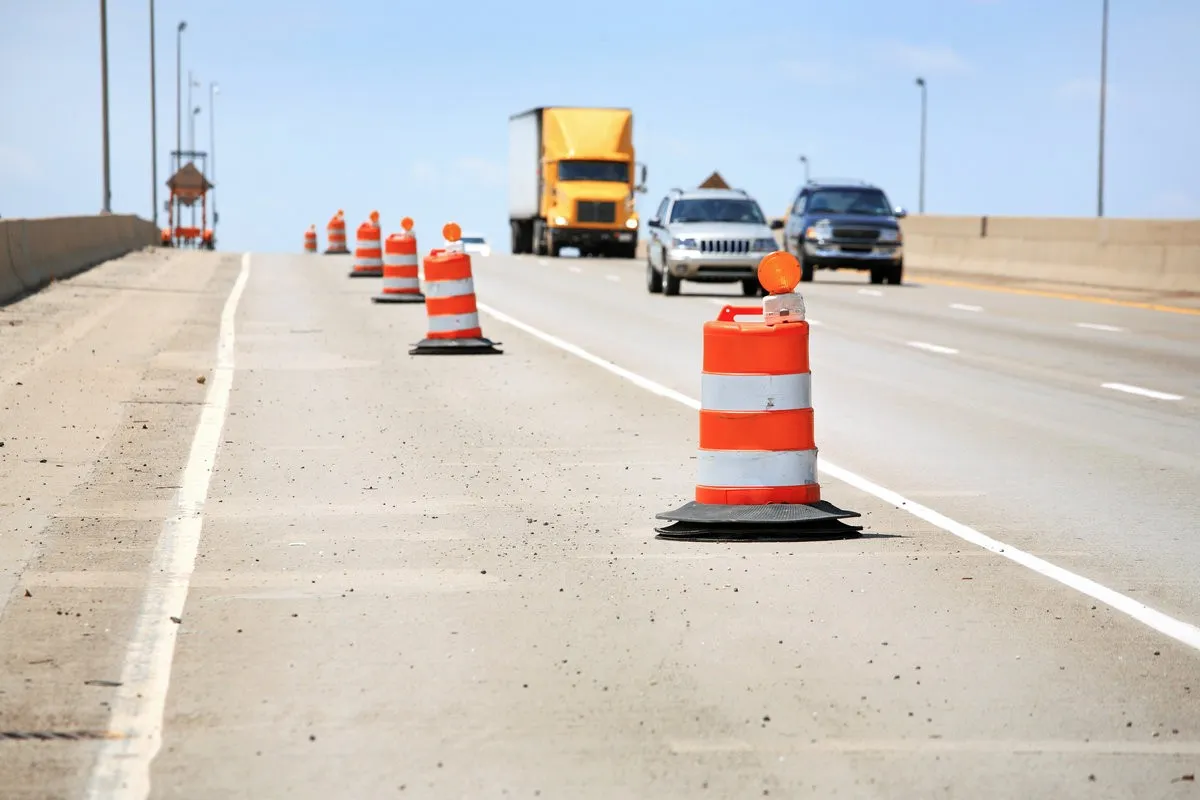










A crash at highway speed rarely leaves a driver with a small problem. If you were hurt on a Texas interstate, toll road, or state highway because another driver, a trucking company, a contractor, or a road authority failed to act with reasonable care, you may be facing emergency surgery, months away from work, and an insurance adjuster who calls before you have left the hospital. Highway crashes often involve several vehicles, several insurers, and evidence that disappears quickly, which is why the first weeks after the collision matter so much.
Amanda Demanda Injury Lawyers represents people injured in highway crashes across Texas from our Houston office at 520 Post Oak Blvd, and we serve clients in Houston, Dallas, Katy, and Odessa as well as the rest of the state. Attorney Amanda Demanda has more than a decade of personal injury experience, has been recognized by Lawyers of Distinction (2024) and the Top 100 National Trial Lawyers, and leads a bilingual team that works with clients in English and Spanish. This page is part of our Texas personal injury practice, and every case is handled on a contingency fee, so you pay no attorney fees unless we recover compensation for you.
Time-Sensitive: Texas Law Limits Your Window to File
Hurt on a Texas highway? Texas’s 2-year statute of limitations begins on the date of your accident. After that window closes, your right to sue may be gone permanently.
How Highway Accident Claims Work in Texas
A highway accident claim in Texas is a negligence claim, which means you must show that someone owed you a duty of care, breached it, and caused injuries that led to real losses. Most claims start with an insurance claim against the at-fault driver or the trucking company. If the insurer will not pay a fair amount, the case can be filed as a lawsuit in a Texas district court, or in federal court when the parties are from different states or a federal claim is involved. Highway cases are often more complicated than ordinary crashes because more than one party may share responsibility.
Other Drivers
Speeding, tailgating, distracted driving, unsafe lane changes, and impaired driving are the most common causes of high-speed collisions.
Trucking Companies
A carrier can be responsible for its driver, its maintenance, its scheduling, and the way cargo was loaded.
Contractors
Companies that design, set up, and staff construction work zones must follow traffic control plans that keep drivers safe.
Road Authorities
In limited situations, a governmental entity may be responsible for a dangerous road condition, subject to strict notice rules.
Texas also applies a modified comparative fault rule under Chapter 33 of the Texas Civil Practice and Remedies Code. Your recovery is reduced by your percentage of responsibility, and if you are found more than 50 percent at fault, you cannot recover at all. Insurers frequently argue that an injured driver was speeding, braked too late, or changed lanes without looking, so building the liability case early matters as much as documenting your injuries.
Statute of Limitations for Texas Highway Accident Claims
Most personal injury lawsuits in Texas must be filed within two years of the date of the accident. Under Section 16.003 of the Texas Civil Practice and Remedies Code, the same two-year period applies to wrongful death claims after a fatal crash, but that clock starts on the date of death rather than the date of the collision.
Limited exceptions exist. Under Section 16.001, the time a person spends under a legal disability when the claim arises, meaning a person younger than 18 or a person of unsound mind, is not counted toward the deadline. Claims against a governmental entity carry much shorter notice requirements, discussed below, and claims involving a trucking company have their own evidence deadlines because carriers are only required to keep some records for at least six months. Waiting to see how your recovery goes can quietly cost you both time and proof.
Texas Highways and Corridors Where Serious Crashes Happen
Texas highways carry a heavy mix of commuter, freight, and long-haul traffic. According to the Texas Department of Transportation 2025 crash facts report, 3,769 people died in traffic crashes in Texas in 2025 and 17,420 people suffered serious injuries. The corridors below carry the heavy truck and high-speed traffic where we most often see severe collisions.
| Corridor | Where It Runs | Traffic Mix to Watch |
|---|---|---|
| I-10 | Across the state from Beaumont through Houston and the Katy Freeway to San Antonio and El Paso | Commuters, port and refinery freight, and long-haul trucks |
| I-35 | From Laredo through San Antonio, Austin, and Waco to the Dallas and Fort Worth area | International freight, construction zones, and heavy commuter volume |
| I-45 | From Galveston through Houston to Dallas | Commuters, delivery trucks, and Gulf Coast freight |
| I-20 | From the Permian Basin through Odessa, Fort Worth, and Dallas toward Louisiana | Energy industry trucks and cross-country freight |
| US-290 and US-59/I-69 | US-290 links Houston and Austin, and US-59/I-69 runs southwest and northeast out of Houston | Commuter congestion with frequent merges and exits |
| Beltway 8 and SH-130 | Beltway 8 circles Houston, and SH-130 runs east of Austin between Georgetown and Seguin as an alternative to I-35 | Toll road speeds and mixed car and truck traffic |
High posted speeds raise the stakes of every mistake. A stretch of SH-130 between Mustang Ridge and Seguin was approved for an 85 mph limit, and even where limits are lower, Section 545.351 of the Texas Transportation Code bars driving faster than is reasonable and prudent for the conditions. A driver can be found negligent for traveling below the posted limit in rain, fog, or heavy traffic.
Types of Highway Accidents We Handle
Highway crashes take many forms, and the cause of each one shapes which parties are responsible and which evidence matters most. We handle claims arising from:
- Multi-vehicle pileups: Chain-reaction collisions in fog, rain, or sudden traffic stops that involve many drivers and insurers.
- 18-wheeler and commercial truck crashes: Collisions with tractor-trailers, including jackknife accidents, underrides, and wide-turn crashes.
- Rear-end and lane-change crashes: High-speed impacts from tailgating, distraction, and unsafe merging.
- Construction zone crashes: Collisions in lane closures, shifts, and work areas with poor signage or traffic control.
- Wrong-way and hit-and-run crashes: Head-on collisions and drivers who leave the scene.
- Rollovers and single-vehicle crashes: Wrecks caused by blowouts, road defects, or evasive maneuvers, including motorcycle crashes on highways.
If a crash caused a death, we also pursue wrongful death claims for surviving family members.
18-Wheeler and Commercial Truck Crashes on Texas Highways
A loaded tractor-trailer can weigh many times more than a passenger car, so a highway collision with one can be devastating for anyone in a passenger vehicle. Truck cases are not ordinary car cases because federal safety regulations, company records, and electronic data all come into play. Several parties can share responsibility, including the driver, the motor carrier, the company that loaded the cargo, and the shop that maintained the truck.
Federal rules limit how long a property-carrying driver may work. Under 49 CFR 395.3, a driver may drive no more than 11 hours after 10 consecutive hours off duty, may not drive after the 14th consecutive hour on duty, and must take a 30-minute break once 8 hours have passed since the last qualifying break. Fatigue violations are often found by comparing electronic logs with fuel receipts, dispatch messages, and delivery records. Federal rules also set minimum insurance levels, and 49 CFR 387.9 requires most for-hire carriers hauling nonhazardous freight in interstate commerce to carry at least $750,000 in coverage, far above the Texas minimum for ordinary drivers.
| Truck Evidence | Why It Matters |
|---|---|
| Electronic Logs and Duty Records | Show hours driven and rest taken. Carriers are required by 49 CFR 395.8 to keep these records for at least six months, so older records may no longer exist. |
| Engine Control Module Data | Can record speed, braking, and throttle in the moments before impact, and can be overwritten when the truck returns to service. |
| Driver Qualification and Training Files | Reveal hiring practices, prior violations, and drug and alcohol testing. |
| Maintenance and Inspection Records | Show whether brakes, tires, and steering were properly maintained. |
| Dispatch Messages and GPS Data | Can show delivery pressure, route choices, and the truck’s speed over time. |
| Cargo and Loading Documents | Show whether the load was overweight, unbalanced, or improperly secured. |
Because trucking companies and their insurers often begin their own investigations within hours, we send preservation letters early so that logs, engine data, camera footage, and maintenance files are kept rather than overwritten. Our truck accident work in Houston is described on our Houston truck accident page, and the same approach applies to truck crashes anywhere in Texas.
Multi-Vehicle Pileups and Shared Fault
When several vehicles collide in sequence, each driver and insurer usually points at someone else. Texas assigns each party a percentage of responsibility, and a defendant found more than 50 percent responsible can be held jointly and severally liable for the full damages under Section 33.013. A defendant at or below that threshold is generally responsible only for its own share. Defendants may also ask the court for permission to name a responsible third party, such as a driver who left the scene, which can shift blame away from them.
Sorting out who hit whom, and in what order, takes more than a police sketch. We look at vehicle damage patterns, event data from each vehicle, traffic camera and dashcam footage, and witness accounts to build a timeline of the chain reaction. In a pileup, your own insurance, the insurance of each driver, and any trucking policy may all be in play, so identifying every available source of coverage is a key early step.
Free Consultation for Texas Highway Crash Victims
Highway crash evidence can be overwritten or lost within days. Talk with our Houston-based team about your options before you speak with an adjuster, available in English and Spanish.
Construction Zone Crashes on Texas Highways
Texas highways have many active work zones at any given time, and they change quickly. TxDOT reports that more than 28,000 crashes in Texas work zones in 2025 killed 203 people, including seven roadside workers, and most of the people who died were drivers and their passengers. Work zone collisions often involve sudden lane shifts, stopped traffic around a curve, narrow lanes beside concrete barriers, and trucks entering and leaving the work area.
Under Section 472.022 of the Texas Transportation Code, traffic fines double in a properly marked work zone when workers are present. A crash can involve a driver who ignored warnings, but it can also involve a contractor whose signs, barriers, or traffic control plan did not give drivers enough notice. We examine the traffic control plan, the permits, the signage, and the work records to see whether the company running the zone met its responsibilities. Private contractors are generally not covered by the Tort Claims Act notice rules, although contractors working for the government sometimes raise their own defenses.
Wrong-Way and Hit-and-Run Crashes
Wrong-way collisions are usually head-on impacts at combined highway speeds, and the injuries are often catastrophic. The responsible driver may have been impaired, confused by ramp layouts or lighting, or driving without proper lane markings to guide them, and each possibility leads to different evidence. Toxicology results, 911 audio, surveillance video, and receipts or records showing where the driver was earlier can all become important.
When a driver flees, the crash may become a criminal case as well as an injury claim. Section 550.021 of the Texas Transportation Code requires a driver in a crash involving injury or death to stop, return to the scene, and stay until fulfilling the duty to give information and render aid, and leaving after a crash that causes death or serious bodily injury is a felony. For the injured person, the practical question is who pays. Texas requires drivers to carry minimum liability limits of $30,000 per person, $60,000 per accident, and $25,000 for property damage, and many drivers carry less coverage than a serious injury costs or none at all. Your own uninsured and underinsured motorist coverage, if you have it, may help fill that gap, and we review every policy that could apply.
Claims Involving TxDOT and Road Defects
Texas governmental entities are generally immune from lawsuits unless the legislature has waived that immunity. The Texas Tort Claims Act contains a limited waiver, and Section 101.021 allows claims for injuries caused by the use of a government-operated motor vehicle and for certain conditions of property. A claim over a dangerous roadway therefore turns on narrow rules, and many claims are never viable. The table below summarizes the rules we examine first.
| Rule | What It Means for a Road Defect Claim |
|---|---|
| Special Defects | Excavations or obstructions on a highway, such as an unmarked excavation or an obstruction in the roadway, are treated differently from ordinary defects, and the entity may have a duty to warn of them under Section 101.022. |
| Traffic Signs and Signals | Section 101.060 addresses missing, damaged, or malfunctioning signs and signals, and an entity is typically given a reasonable time to fix a problem after notice. |
| Discretionary Decisions | Section 101.056 excludes claims based on decisions the law leaves to a governmental entity’s discretion, such as many design and planning choices. |
| Damage Caps | Section 101.023 limits recovery to $250,000 per person and $500,000 per occurrence for state government, and $100,000 per person and $300,000 per occurrence for most local governmental units. |
| Notice Deadline | Section 101.101 requires notice to the governmental unit within six months of the incident, with an exception when the unit has actual notice of the injury. |
Because the notice window is only six months, a suspected road defect claim cannot wait for the end of your treatment. Roadway conditions may also be repaired quickly, so photographs and measurements taken soon after the crash can matter a great deal.
Evidence That Builds a Highway Accident Case
Highway cases are won or lost on evidence gathered in the first days and weeks. The officer’s Texas Peace Officer’s Crash Report, known as the CR-3, is usually the first document we review. TxDOT sells these reports through its online crash report purchase system for $6 for a regular copy and $8 for a certified copy, and people involved in the crash and their authorized representatives are among those who can request one. The report includes a narrative, a diagram, and contributing factors, though it is not the final word on fault and can contain errors we can challenge.
Other evidence is more fragile. Event data recorders in passenger vehicles and trucks can capture speed, braking, steering, and seat belt use, and Section 547.615 of the Texas Transportation Code generally limits who may retrieve that data to the vehicle’s owner, with the owner’s consent, or under a court order in certain situations. That is why we send preservation letters quickly and seek court orders when needed. We also pursue 911 recordings, traffic and business camera footage, dashcam video, scene photographs, skid and gouge marks, and the vehicles themselves before they are repaired or scrapped.
Compensation Available After a Texas Highway Accident
Texas law allows people injured in highway crashes to pursue compensation for both financial losses and the ways an injury changes daily life. The amount depends on the severity of the injuries, the available insurance, the strength of the evidence, and your share of fault, if any.
| Damages Category | What It May Cover |
|---|---|
| Medical Care | Emergency transport, surgery, hospital stays, rehabilitation, medication, and documented future care. |
| Lost Income | Wages missed during recovery and reduced earning capacity if you cannot return to the same work. |
| Non-Economic Losses | Physical pain, mental anguish, physical impairment, and disfigurement. |
| Property Damage | Repair or replacement of your vehicle and personal property damaged in the crash. |
| Family Claims | Wrongful death damages for the surviving spouse, children, and parents under Section 71.004, and loss of consortium claims for a spouse in some serious injury cases. |
If you share responsibility for the crash, the court reduces your damages by your percentage of fault as long as that percentage is not more than 50 percent. For example, a person found 20 percent responsible would recover 20 percent less. That is why proving what the other drivers did, not just what you did, is central to a highway case.
How We Approach Highway Accident Cases
We start by identifying everyone who may be responsible and every insurance policy that may apply, then work to lock down evidence before it disappears. That means ordering the crash report, sending preservation letters to carriers and contractors, documenting the scene, and gathering your medical records as treatment continues. Because highway injuries are often severe, we generally avoid valuing a claim until the long-term medical outlook is clearer, since an early settlement can leave you paying for future care out of pocket.
From there, we work with your treating physicians and, where the case calls for it, accident reconstruction, medical, and vocational professionals who can explain what happened and what the injuries will mean for your future. We keep you informed throughout, communicate in English and Spanish, and prepare each case as though it may go to trial. You can learn more about our firm, our values, and our attorneys on our About Us page.
What to Do After a Highway Accident in Texas
The steps you take at the scene and in the days that follow can protect both your health and your claim. If your injuries make these steps difficult, a spouse or relative can help with each one.
1. Get to Safety and Call 911
Move out of live traffic if you can do so safely, turn on hazard lights, and call 911 so police and medical responders are sent. Never stand between vehicles on a highway.
2. Get Medical Care
See a doctor even if you feel fine. Adrenaline hides injuries, and early records link your symptoms to the crash.
3. Document the Scene
Photograph vehicles, lane markings, signs, work zone barriers, and debris. Collect witness contact information and the crash report number.
4. Avoid Recorded Statements
Be polite but brief with the other side’s insurer, and do not discuss fault or sign medical releases before speaking with a lawyer.
5. Preserve Your Vehicle and Data
Do not repair or scrap your vehicle until it has been documented. Keep your phone, dashcam footage, and any receipts or bills.
6. Call a Lawyer Quickly
Early contact helps preserve truck data, camera footage, and the six-month notice window for government claims.
Our Houston Office and Serving Clients Across Texas
Our Houston office is at 520 Post Oak Blvd, Suite 585, Houston, TX 77027, in the Uptown district near the Galleria. We serve injured people across Texas, including clients in Houston, Dallas, Katy, and Odessa, and consultations are available in English and Spanish. Our Houston personal injury page describes our work in the Houston area, and you can contact us from anywhere in the state.
Frequently Asked Questions About Texas Highway Accident Cases
Contact Amanda Demanda Injury Lawyers Today
Attorney Amanda Demanda and the Houston team bring more than a decade of personal injury experience to highway accident claims throughout Texas, with recognition from Lawyers of Distinction (2024) and the Top 100 National Trial Lawyers. We represent clients in English and Spanish and work on a contingency fee, so cost is never a barrier to getting answers about your case.
A highway crash can change your life in an instant, and Texas’s two-year deadline means waiting can cost you options. Contact the firm today through our online contact form or call 1-844-DEMANDA for a free consultation with our Houston office.